


Custom software development in Kurdistan and Iraq
Software built around how your business already works
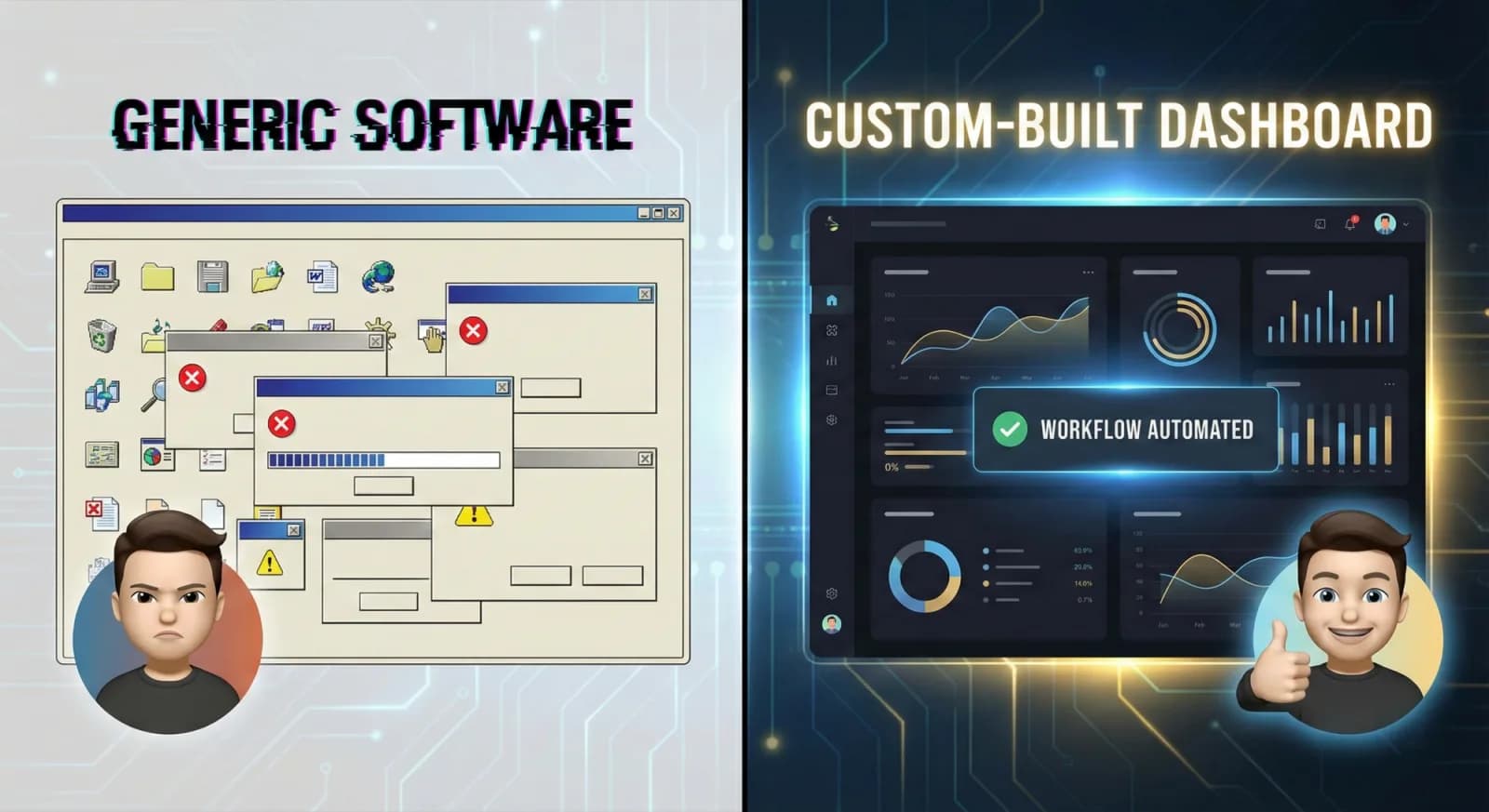
Many businesses in the Kurdistan Region still run important work on notebooks, WhatsApp groups and spreadsheets passed between people. It works until the business grows: nobody can say in one place what was collected, who approved it, or what a branch earned last month.
Enzziro builds custom software for that point. We are a software company in Sulaymaniyah (Slemani) that designs internal systems, back offices and client portals for businesses in Sulaymaniyah, Erbil and across Iraq. Each one is shaped around the process you already run, not a generic tool you have to bend your business to fit.
What we build
- Back offices and operations systems. One place for the records a business runs on: customers, orders, units, stock, cases.
- Approval workflows. Work moves from draft to submitted to approved, and nothing reaches the books without the right person signing it off.
- Client portals. Customers submit requests, upload documents and follow progress themselves.
- Calculators and pricing engines. The rules your staff apply by hand, turned into software that applies them the same way every time.
- Reports and dashboards. Per branch, per period, per person, exported in the language the reader needs.
- Replacements for legacy tools. Moving your data off old software or spreadsheets without losing its history.
What's built in
The details that decide whether people trust a system, and keep using it:
- Roles and permissions, so each person sees what their job needs and nothing more.
- An audit log behind every change: who did what, and when.
- English, Kurdish and Arabic interfaces, right to left where needed, and reports that pick their language at export.
- Sign-in that suits your staff: one-time codes or magic links by email, or passwords with self-service reset.
- Bulk import for the long lists (price catalogues, units, customers) so setup doesn't mean weeks of typing.
Examples from our work
- Rentro: a property-management system for a family portfolio in the Kurdistan Region. It holds buildings, units, tenants and leases, and runs a collector workflow in which every cash round is itemised and approved by an accountant before it reaches the books. It has five roles and an audit log behind every change.
- Amsho Global: a staff back office and client portal for a visa and translation agency in Sulaymaniyah. Cases move through seven stages, and the office manages countries, visa types, prices and required documents itself, with bulk import for the long lists.
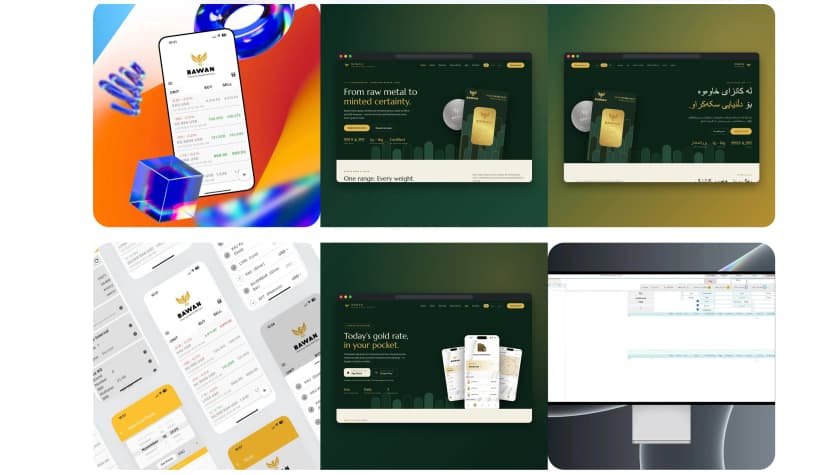
- Bawan Gold: internal tools for a precious-metals wholesaler in Sulaymaniyah, covering scrap and purity calculators, wholesale rate management and a corporate website.

How a project runs
- Map the process. We sit with the people who do the work today, not just the managers, and write down how it really runs, including the exceptions.
- Scope and plan. You get a written scope, the data model, the roles, and a timeline.
- Prototype. You click through the key screens before development starts.
- Build in sprints. You get weekly updates and a staging system your team can try with real examples.
- Move the data and train your team. We import your existing records and train each role on its own screens.
- Support. Fixes, changes and new modules as the business evolves.
Technology we use
- Web applications in React and Next.js, with back ends in Node.js with TypeScript or Python.
- PostgreSQL for data that has to add up: ledgers, balances, histories.
- Background job workers for imports, reports and notifications.
- Cloud hosting, backups and automated deployments. See build automation for how releases stay repeatable.
Custom software or an off-the-shelf tool?
We'll tell you when an existing product fits better. Off-the-shelf software is usually the right call when your process is standard and the tool supports your languages. Custom software earns its cost when:
- your process is what sets you apart, and a generic tool would force you to change it;
- you need Kurdish or Arabic throughout, including in reports;
- you are paying per user for several tools that don't talk to each other;
- you need controls a generic tool lacks, such as approvals and audit trails on cash.
What affects the cost
- The number of roles and workflows. Every approval path and permission rule is design and testing work.
- Data migration. Clean spreadsheets are quick to import. Years of paper records are not.
- Integrations with accounting, payment, messaging or government systems.
- Languages and reports. Multilingual interfaces and exports add work, especially right-to-left ones.
Describe the process you want to fix on the start a project page, and we will come back with a scoped estimate.
Frequently asked questions
Who owns the software and the data?
You do. The code, the database and everything in it belong to your business, with no per-user licence to us.
Can it work in Kurdish and Arabic?
Yes. Our systems run in English, Kurdish and Arabic, with right-to-left layouts, and reports can be exported in the reader's language.
We already use spreadsheets. Can you move that data over?
Yes. Importing existing records is part of the project, and the system includes bulk import for lists that keep growing.
Can staff use it on their phones?
Yes. We design the screens staff use in the field for phones first. Where a native app makes more sense, we build one on the same back end; see mobile app development.
What happens when our process changes?
The system is yours to change. We build it to be extensible, so a new role, step or report is an addition rather than a rewrite.
Related work
Ready to bring your vision to life?
Enough thinking. You have the vision, we have the engineering. Let's combine forces and launch something world-class.
Rapid Support
Free Consultation